In Our Wake

“Brave!” or: “… He’s really going to do that!”

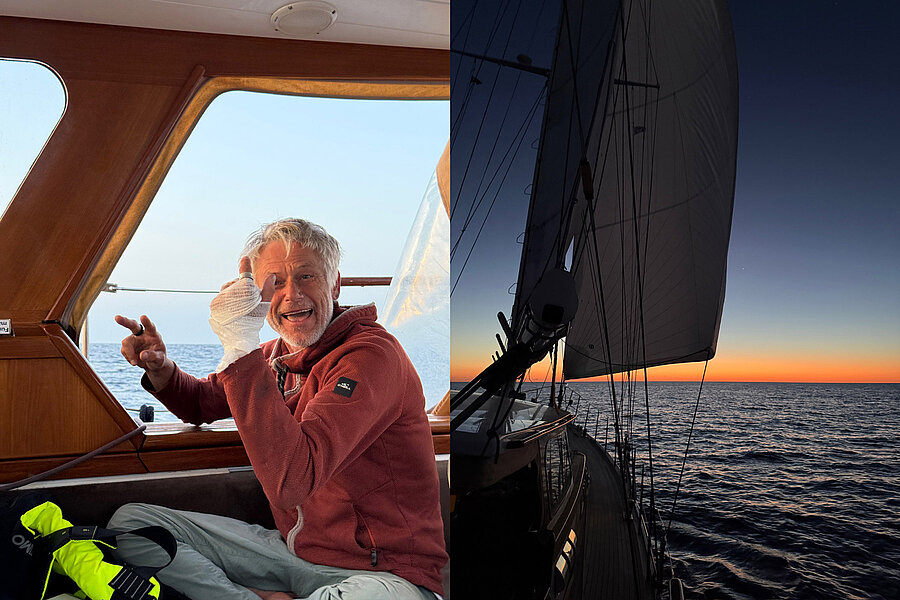
Those were the first comments I heard when it became clear that I was sailing around Europe on a boat I knew practically nothing about—or rather, one I’d owned for exactly one week. My response was as naive as it was sincere: “The world belongs to the brave.” With a wink, of course. And today, after everything we’ve been through, I can say: Have I regretted it? Not one bit—not for a single moment!

On the contrary. What we’ve learned about the Princess Sophie over the past few weeks is something we could never have picked up at the marina—even with the best support from the previous owners, who truly deserve a big thank you. Always available, always ready to listen, always providing quick and competent help. But true understanding doesn’t come from the dock or the shore power connection—it comes out on the water, when things happen, when systems suddenly start acting on their own, and when decisions have to be made not in theory, but in practice. And that’s exactly where the strength of this journey lay: with the right people on board, every problem became not an obstacle, but a challenge—and always, ultimately, a solution.

Numbers that only tell the story at second glance

On paper, it’s 3,253 nautical miles—just over 6,000 kilometers—from Neustadt in Holstein to Milazzo in Sicily. Numbers that read rather dryly—until you begin to fill them with experiences. The longest daily leg was 142 nautical miles, the shortest 92.5—days that felt completely different and yet were all part of one journey. The fastest measured speed over ground was 13.5 knots. (That doesn’t just feel fast!)

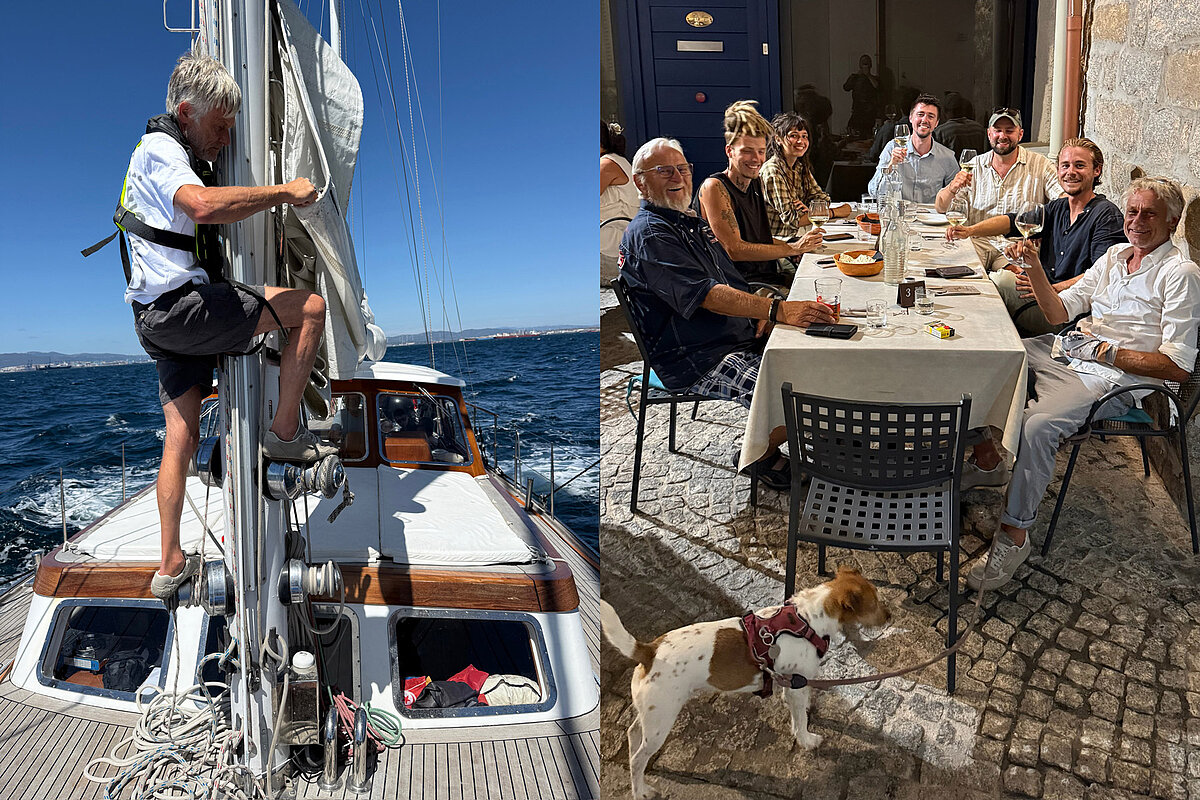
We were on the water for 81 days and nights. The sun rose 81 times and set 81 times. Of those, 49 days were at sea, and the rest were spent in ports—breaks that were sometimes necessary and sometimes seemed almost too short. An average of 66 nautical miles per day, more than originally planned. We crossed the prime meridian twice, visited eight countries, flew the flags of seven host nations, and had ten different crew members on board. Some stayed only for a few days; one stayed for the entire journey: Jürgen.

Add to that 3,120 liters of diesel, about 1,250 nautical miles under engine power, and 7,300 liters of fresh water. Two full moons and new moons, one solar eclipse—and almost every night, a starry sky that reminds you just how much bigger it all really is.
A ship changes—and so do you

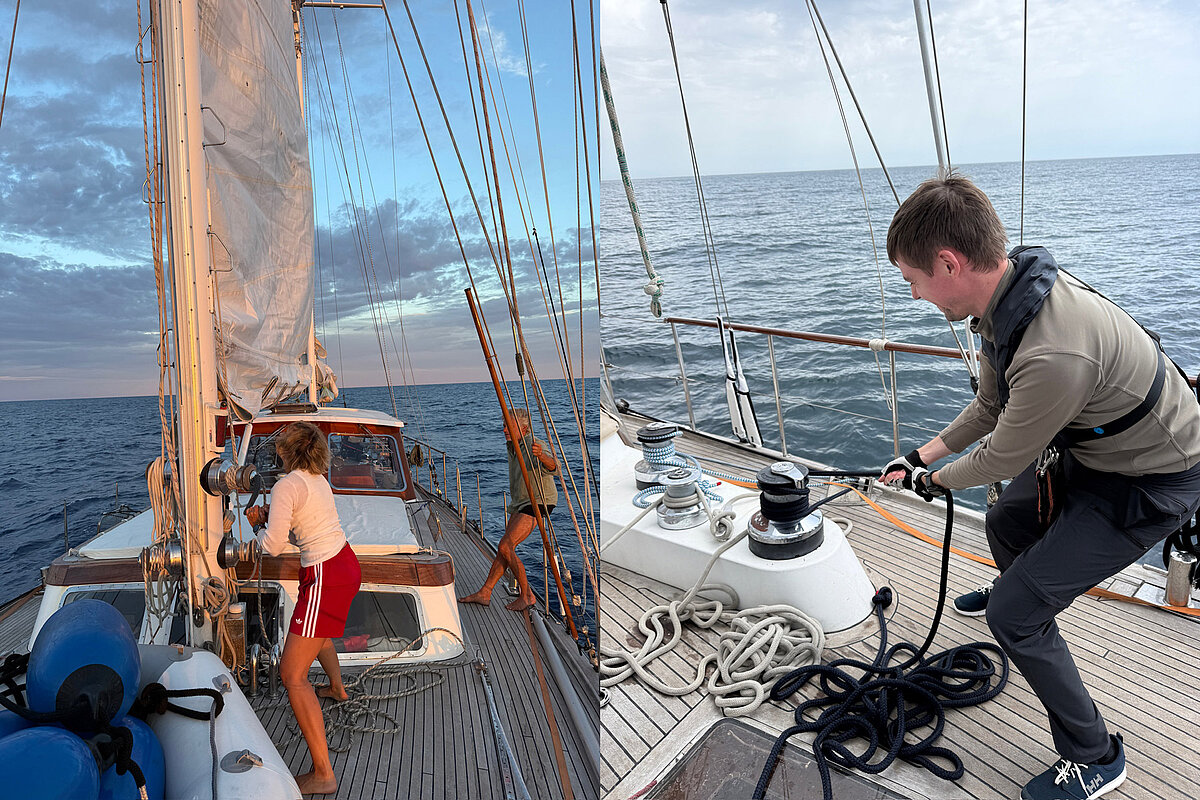
The Princess Sophie isn't the same today as she was when we set sail. And that's not just because of the new sheets, reefing lines, bullstander, AIS, radios, a chartplotter, and USB ports at the helm. A motorized dinghy (thanks, Alex 😉), a repaired horn (thanks, Jakob), the reinforced railing on the wheelhouse, and well-thought-out details like a water meter for controlled refueling.

The key point is something else: We understand this boat now. Not completely, not perfectly—but in a way you can’t buy. You can only experience it.

Small sacrifices for great experiences

Of course, a trip like this doesn’t go by without leaving its mark. A fingertip, a fingernail, a bruised tailbone, scrapes on arms and legs—and sore muscles for pretty much everyone. Nothing dramatic. But enough to know that we weren’t just spectators.

There were losses: two iPhones, a pair of sunglasses—and yes, actually a dinghy, too. And there was a whole list of things that broke or at least decided to take a break: diesel pumps, the electrical system, the depth sounder, the radio, the refrigerator, the swim platform. A tear in the genoa after an unfortunate encounter with the spreader. A stern stay after contact with a buoy.

Plus the classics you don’t need but never forget: an open window in rough seas (a week of drying mattresses), fresh water in the bilge, the engine compartment serving as an unintended extra tank while bunkering.

All things that are annoying at the moment—and in hindsight, exactly what you needed to truly understand the system.

And yet: They did almost everything right

Despite this list, the conclusion remains surprisingly clear: It went well. Very well, in fact. 

Not a single storm (if we generously overlook the 55-knot wind in the harbor of Ponza for a moment). No accidents, nearly flawless harbor and anchoring maneuvers throughout, good winds, moderate swells, and plenty of those days when you’re just sailing and realize that everything is just right. Dolphins almost every day, a whale sighting in the Mediterranean, seals and harbor seals in the north, porpoises in the English Channel—but unfortunately no orca that wanted to get to know us better.

Kosy has traded her love for squirrels for a genuine enthusiasm for dolphins and has adjusted to life on board faster than anyone would have expected. Her fitness has improved, the lack of sleep has remained surprisingly bearable—and the safety protocols held up.

And now?

First, a winter break. In January, we’ll continue on toward Greece. A new chapter, a new adventure. And most certainly another moment when life shifts into high gear. Until then:

Stay tuned.